
They came to Canada with two suitcases, a marriage certificate, and a dream.
A new apartment. New jobs to find. New everything. They were excited. They were brave. They held hands at the airport and told themselves: we have each other. That's enough.
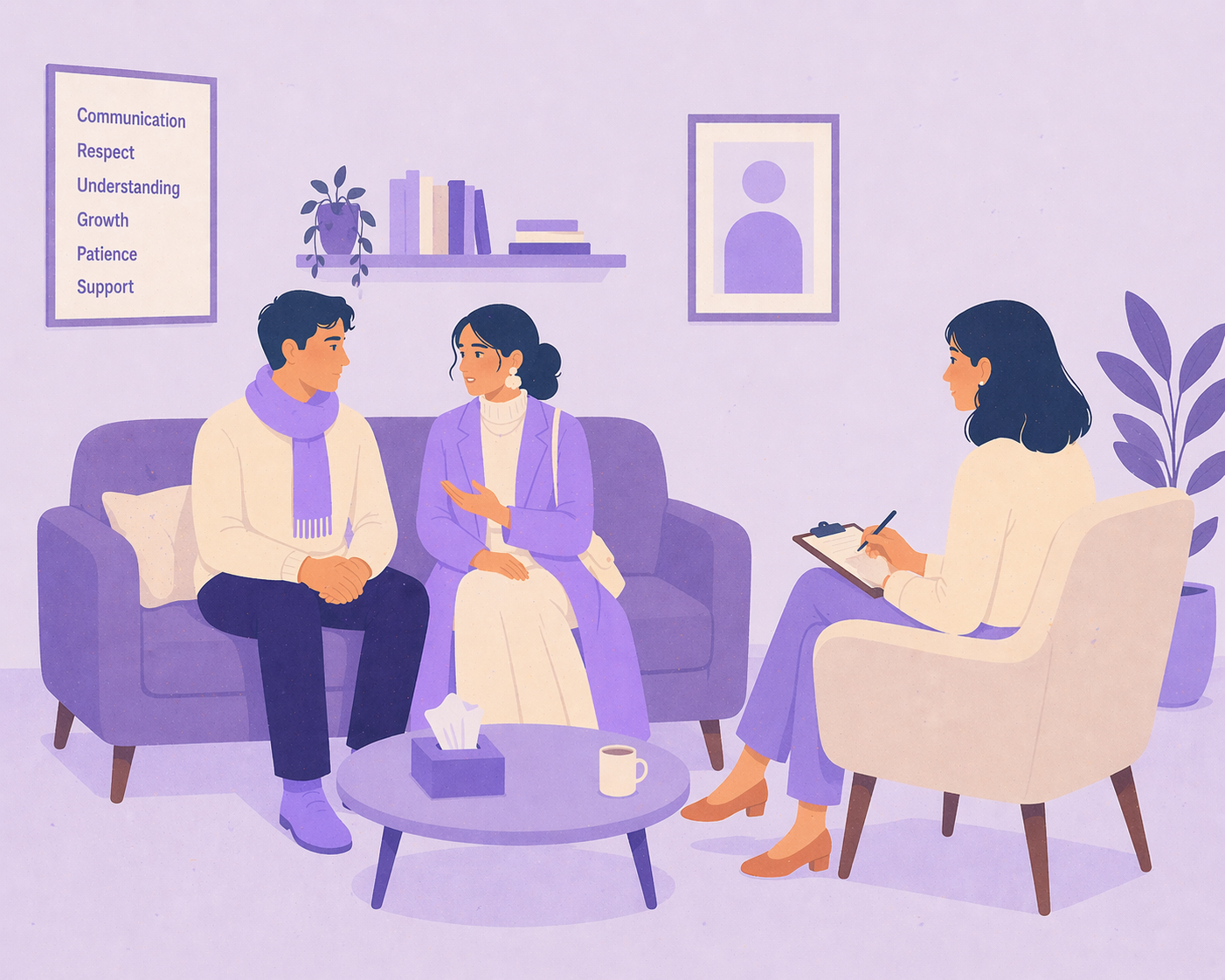
Two years later, they sat across from me in a session — same sofa, opposite ends — and neither of them could remember the last time they had laughed together.
This is not a rare story. It is the story I hear most often in my therapy room.
Immigration is sold as a beginning. Nobody talks about what it costs.
We celebrate immigration. The courage it takes. The opportunities it opens. And those things are real — the excitement, the possibility, the pride of building something new.
But there is another story running underneath all of that. A quieter one. The one about what happens to the relationship when two people are simultaneously trying to survive a new country, find their footing professionally, manage family expectations from 10,000 kilometres away, and figure out who they each become here.
Immigration doesn't just change your address. It changes your roles, your routines, your sense of self, and — often without anyone noticing — it changes your relationship.
Laying a new foundation together while the ground is still shifting. That is the real immigration story.
The stressors most couples don't name out loud
In my clinical work with South Asian couples and NRIs, I see the same specific pressures showing up again and again.
Financial stress. One person finds work first. The other is still navigating credentials, interviews, or visa restrictions. The income gap creates a power shift nobody agreed to, and resentment builds quietly underneath the surface.
Role confusion. Back home, there was a structure. Here, everything is renegotiated. Who manages the home. Who earns. Who carries the mental load. The roles shift overnight and nobody has the conversation about it.
Isolation. Your support system is gone. Your mother, your friends, your community — they are a timezone away. Your partner becomes your everything. Your best friend, your therapist, your family, your anchor. That is too much weight for one person to carry, and it strains even the strongest relationships.
The acculturation gap. One of you adapts faster. Maybe one of you found community more easily, or had a workplace that helped you integrate. The other is still finding their footing. Slowly, without meaning to, you begin to live at different speeds. The distance that grows from this is real — and it is rarely talked about.
Family pressure from back home. Ageing parents. Sibling responsibilities. In-laws with expectations. The guilt of being away. None of these stop at the border. They come with you, they live in your phone, and they add a layer of stress to an already stretched relationship.
The emotional baggage that stays packed
Here is what I have observed over years of working with South Asian immigrant couples: you can unpack your boxes and still be completely unpacked emotionally.
Most South Asian couples were never given the words for what they feel underneath the conflict. We were raised in cultures that valued endurance over expression. Strength over vulnerability. Getting through it over sitting with it.
Those values protected our families for generations. But they were never designed for the specific loneliness of two people in a new country trying to build something — while carrying everything silently.
So what happens instead? The tension stays. It shows up as constant fights with no resolution. As wanting to walk away. As turning to parents back home who love you deeply but can only see one side of the story — and whose advice, however well-meaning, is often shaped by cultural expectations that may not reflect what you are actually experiencing.
The conflict is not the problem. It is what lives underneath it that nobody is naming.
This is not a love problem
I want to say this clearly to every South Asian couple reading this.
You are not failing your relationship. You are not incompatible. You are not the first couple to find yourselves here.
What you are experiencing is the specific, complex, largely invisible weight of immigration on an intimate relationship — compounded by a cultural framework that never taught you how to talk about it.
Nobody gave you the words for this. Nobody prepared you for it. And most of the support available — whether from family, or from therapists who don't understand the cultural context — misses the full picture.
What I see in my therapy room, again and again, is that couples do not need to love each other more. They need a space where both of them can finally be honest. Where the specific pressures of immigration, culture, family, and identity are understood — not explained away, not minimised, not filtered through a lens that was never designed with your experience in mind.
What actually helps
Working with a therapist who understands your unique cultural and immigration challenges changes something fundamental. It means you do not have to spend half of every session explaining your background. It means the language of your experience is already understood in the room.
It means the work can begin immediately.
In my practice, I work with South Asian couples and NRI individuals to:
- Build the emotional vocabulary that was never passed down to them — the language to name what lives underneath the conflict.
- Understand the specific dynamics that immigration creates in a relationship — and why those dynamics make complete sense given what they have been through.
- Develop new skills for connecting with each other — not just managing the conflict, but actually rebuilding intimacy and trust.
- Grow stronger together — not despite what they have been through, but because they chose to face it.
A note
If you recognised yourself anywhere in this article, I want you to know something.
The fact that you are reading this — that you are looking for language, for understanding, for a path forward — is already something. It is already different from what your parents did. It is already brave.
Your relationship deserves a chance. And so do you.
If this resonated with you, please share it with someone who needs to read it.